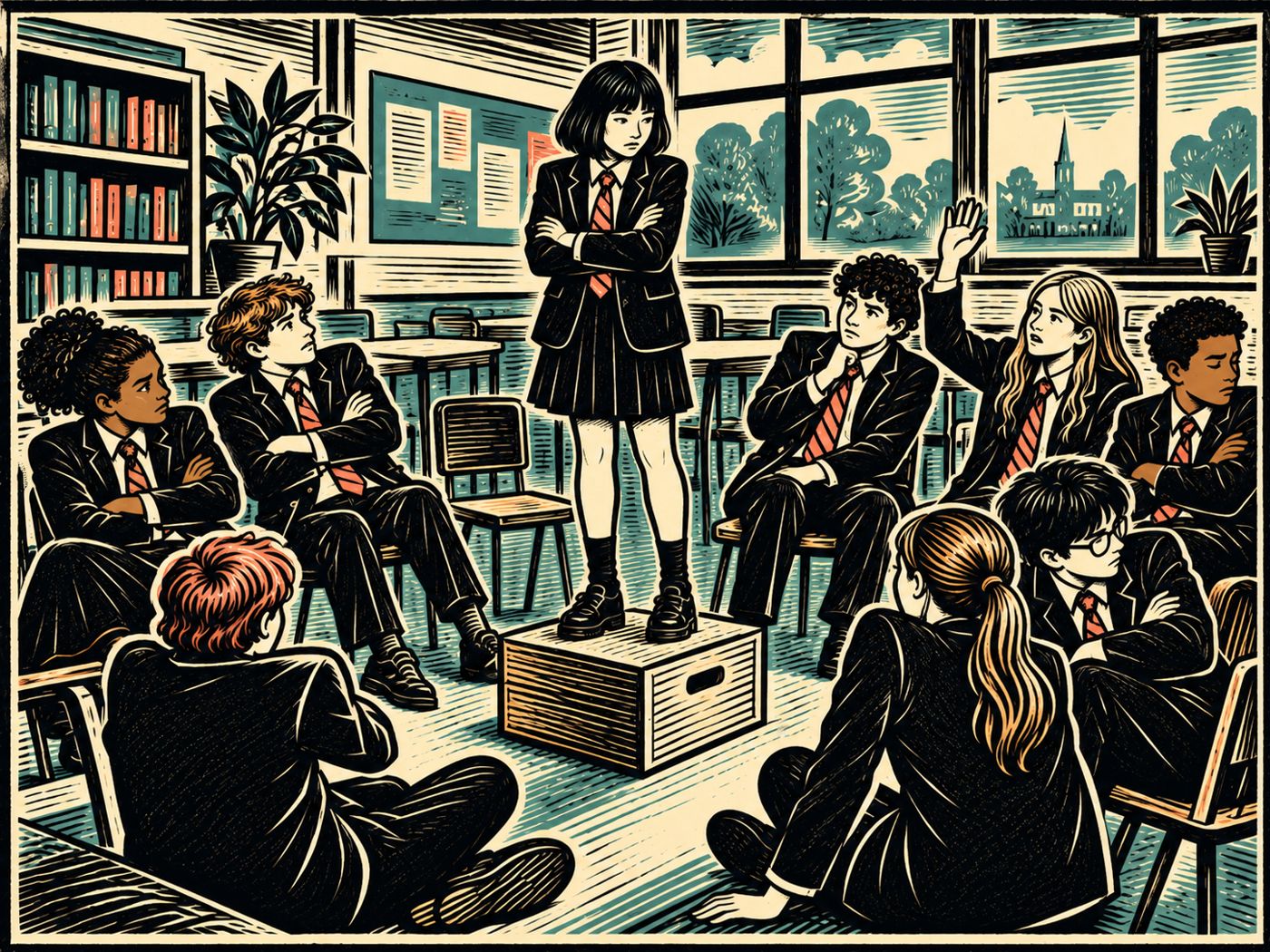
“Who disagrees with Jo?”

“Here’s an idea. What might be the advantages?”
Four practical principles for class discussions that won’t start, won’t stop, or turn personal.
Difficult topics come into the classroom whether or not they are on the lesson plan.
They arrive with the news, with the playground, with whatever students heard at home. Teachers need to be ready for the moment one of them surfaces.
The principles come from many years of running discussions on contested issues, with young people, residents and councils, in rooms where things really could go wrong. They work in any subject and with any age group.
Every teacher who leads discussion knows at least one of these.
Tumbleweed. Blank faces, shuffling feet. The most common failure, and usually because we assume the class cares about the question as much as we do.
Quagmire. The discussion loops, drifts, or belongs to one voice, and the lesson runs out before anything is decided.
A disagreement about an idea becomes an attack on a person, and the room takes sides.
“Who disagrees with Jo?”
“Here’s an idea. What might be the advantages?”
Each one answers a moment teachers recognise. Staff practise them through games and short scenarios, then try them on each other.
For when a disagreement about an idea turns into a verdict on the student who said it.
For the discussion where everyone is talking, but about different things.
For the student who came to win a debate while everyone else was trying to understand each other.
For the moment a student starts “I’m sorry, but…” and you can already see where it’s going.
“Discussions are for analysing and evaluating objects – ideas, concepts, things – rather than people.”
One vocabulary for talking about discussion across a department or school.
Whole staffs, primary or secondary. Particularly useful for pastoral teams, oracy leads, and schools building a whole-school approach to discussion and debate.
| Format | One school | Clusters |
|---|---|---|
| Twilight (60–90 min) | from £350 | £500 per school for a series of three |
| Half day | from £500 | Group rates available |
| Full INSET day | from £850 | From £500 per school for two; £400 per school for three or more |
Delivered in your school, anywhere in the UK. Travel charged at cost. Prices exclude VAT.
Each principle has its own post on The Philosophical Theatre Facilitator, with worked examples.
Drama games for statutory primary citizenship, for teachers who have never taught it.
How to let students argue about real politics and stay inside impartiality guidance.
Students choose a local issue and devise a short piece of political theatre about it.